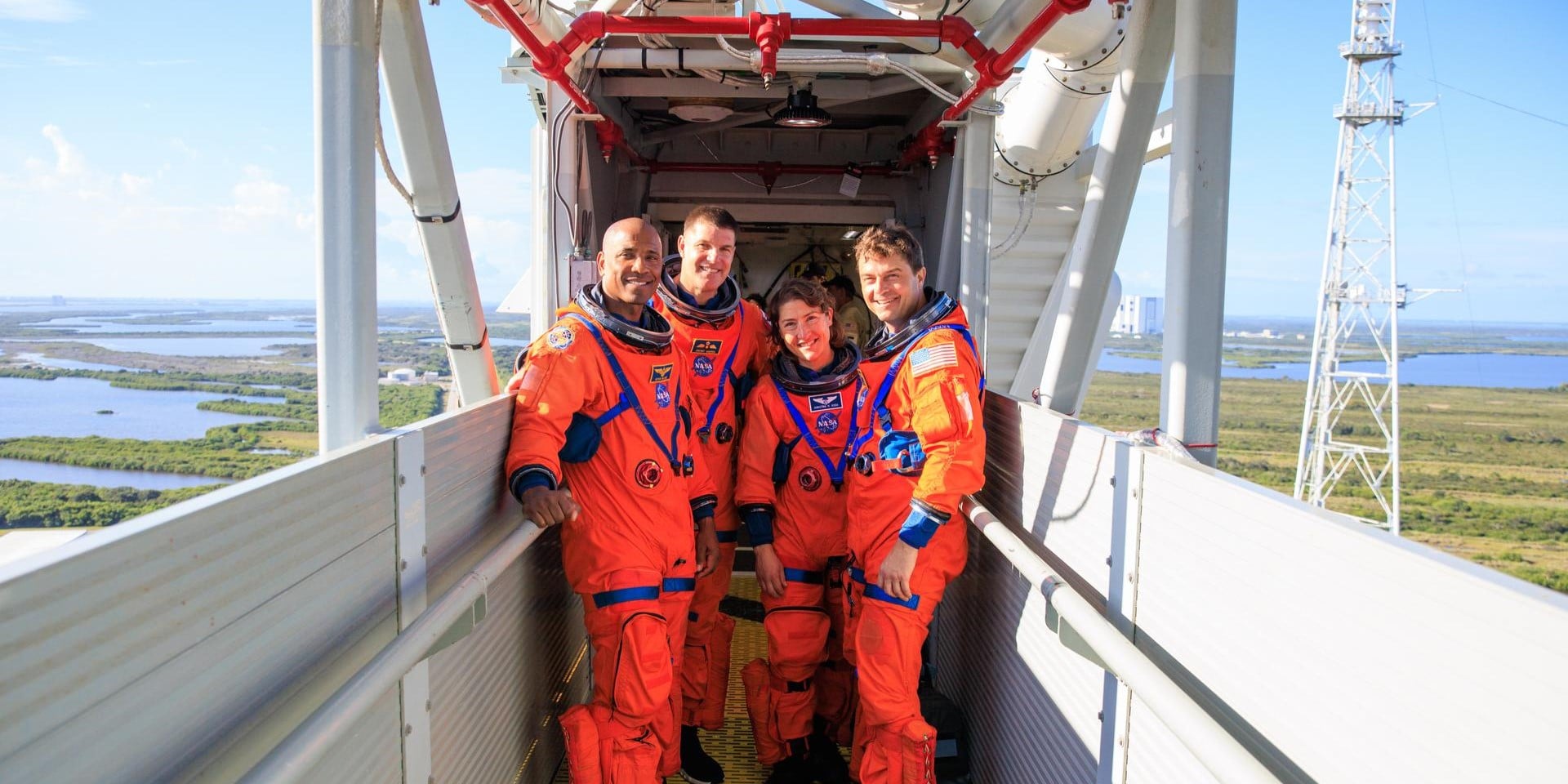
In a defining moment for modern space exploration, NASA is preparing to send astronauts around the Moon for the first time in half a century. The mission, known as Artemis II, is not just a return to deep space, but a bold step toward a sustained human presence beyond Earth.
A Historic Return to Deep Space
The last time humans ventured beyond low Earth orbit was during the Apollo Program, with Apollo 17 marking the end of that era in 1972. Artemis II aims to reignite that legacy, carrying a new generation of astronauts on a lunar flyby mission that will test systems critical for future Moon landings and eventual missions to Mars.
Unlike its predecessor Artemis I, which successfully demonstrated the capabilities of NASA’s new deep space hardware without a crew, Artemis II will have astronauts onboard. This makes it one of the most anticipated missions in recent history.
Meet the Artemis II Crew
NASA has selected four astronauts for this landmark mission, representing both experience and diversity:
- Reid Wiseman (Commander)
- Victor Glover (Pilot)
- Christina Koch (Mission Specialist)
- Jeremy Hansen (Mission Specialist, Canadian Space Agency)
This mission marks several historic firsts, including the first woman and the first Black astronaut to travel to the vicinity of the Moon, as well as the first Canadian astronaut on a lunar mission.
The Spacecraft and Rocket Powering the Mission
Artemis II will rely on two major technological pillars:
- Orion spacecraft
- Space Launch System
The Orion spacecraft is designed to carry astronauts safely beyond Earth orbit, equipped with advanced life support, navigation, and safety systems. Meanwhile, the Space Launch System, often described as the most powerful rocket ever built, will provide the thrust needed to send Orion and its crew on a trajectory around the Moon.
Mission Profile: A Journey Around the Moon
Artemis II is planned as a 10-day mission that will send the crew on a free-return trajectory around the Moon. This means the spacecraft will loop around the Moon and naturally return to Earth without requiring major propulsion corrections.
Key mission phases include:
- Launch from Kennedy Space Center
- Earth orbit systems check
- Translunar injection toward the Moon
- Lunar flyby at a distance of approximately 7,400 kilometers above the surface
- Return trajectory and splashdown in the Pacific Ocean
The mission is not intended to land on the Moon, but to validate critical systems, including life support, communication, and navigation, under real deep-space conditions.
Why Artemis II Matters
Artemis II is more than a symbolic return. It serves as a crucial stepping stone for future missions, particularly Artemis III, which aims to land astronauts on the lunar surface.
The mission will test:
- Human performance in deep space
- Spacecraft reliability over long durations
- Emergency procedures far from Earth
- Coordination between international space agencies
These insights will directly shape the future of lunar exploration and long-duration missions to Mars.
International Collaboration at Its Core
One of the defining features of the Artemis program is its global nature. The inclusion of a Canadian astronaut highlights growing international partnerships. Agencies such as the European Space Agency and the Japan Aerospace Exploration Agency are also contributing to future Artemis missions, including the development of the Lunar Gateway space station.
Launch Timeline and Current Status
As of the latest updates, Artemis II is targeted for launch no earlier than late 2025 or 2026, depending on ongoing testing and system readiness. NASA has been conducting rigorous evaluations of the Orion spacecraft, its heat shield, and life support systems following Artemis I.
Engineers are also addressing lessons learned from the uncrewed mission, ensuring maximum safety for the astronauts onboard.
A New Era of Exploration Begins
Artemis II represents a turning point in human spaceflight. It bridges the gap between past achievements and future ambitions, setting the stage for a permanent human presence on the Moon and beyond.
For millions around the world, this mission is more than a scientific endeavor. It is a reminder of humanity’s enduring curiosity and our relentless drive to explore the unknown.
As the countdown to launch continues, Artemis II stands poised to make history, once again carrying humans into deep space and bringing the Moon closer than ever before.