Loneliness, Cats and the Secret of the life: The Wind Up Bird Chronicle Reimagined
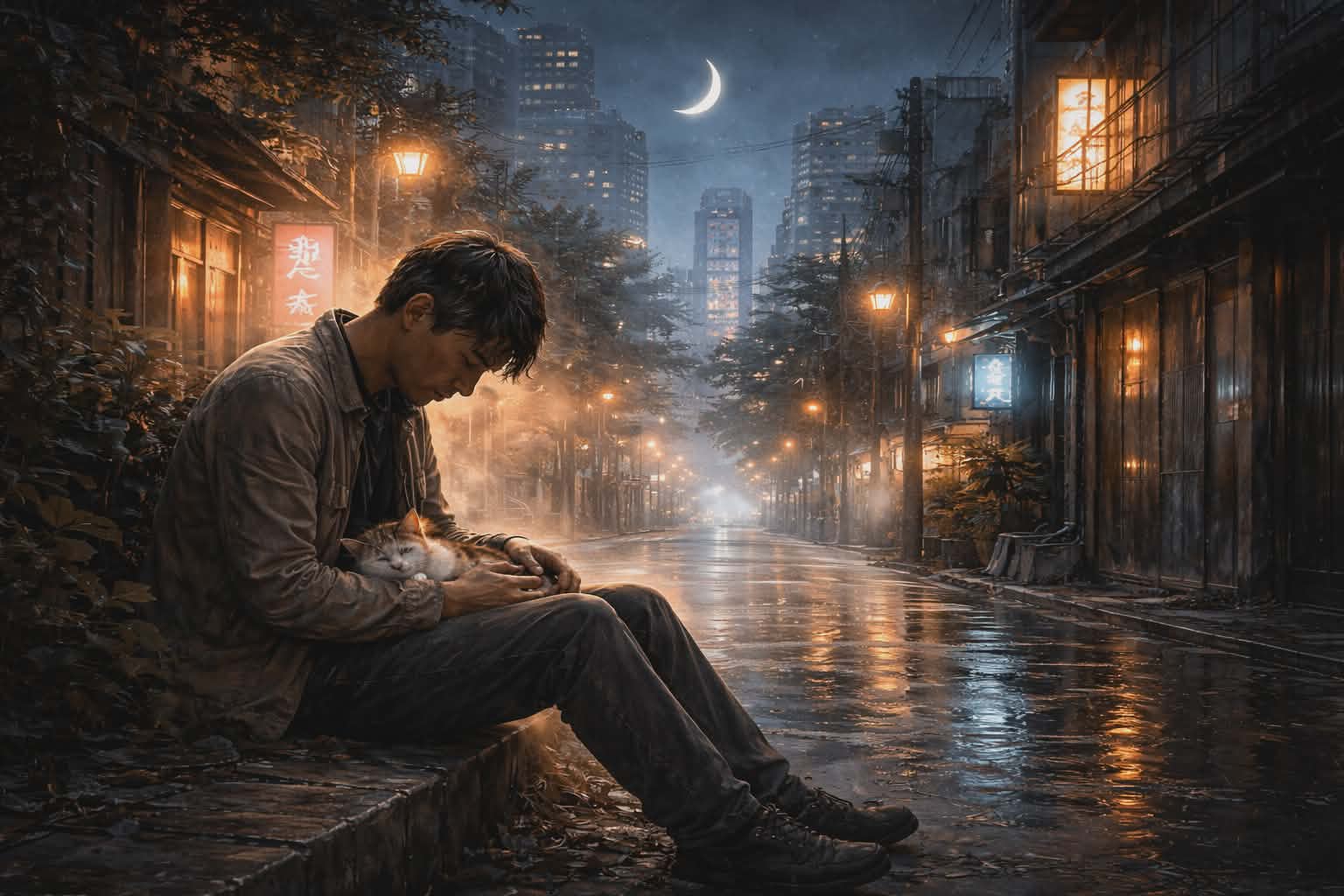
As Murakami quoted "But even so, every now and then I would feel a violent stab of loneliness. The very water I drink, the very air I breathe, would feel like long, sharp needles. The pages of a book in my hands would take on the threatening metallic gleam of razor blades. I could hear the roots of loneliness creeping through me when the world was hushed at four o'clock in the morning."
There are also mornings when the world is floating, the sunlight is reluctant to fall to the floor and the city is breathing with very soft yet nearly agonizing patience. During such hours Haruki Murakami calls us to the meeting with Toru Okada, a man whose life seems to be ordinary but exists in some incredible streams. Toru is drifting in Tokyo without any belongings and everything simultaneously: boiling water, deserted streets, a lost cat, and, unconsciously, a search of himself.
The Tokyo depicted in the book by Murakami is full of uncanny concealed at ordinary locations. Invisible life resonates in empty wells, quiet streets, and the hum of a refrigerator and reminds of the past and the subtle presence of the unseen. Of what we see and what really happens, we find that Toru is in touch with life most when he has a little being in his lap:
“Holding this soft, small living creature in my lap this way, though, and seeing how it slept with complete trust in me, I felt a warm rush in my chest. I put my hand on the cat's chest and felt his heart beating. The pulse was faint and fast, but his heart, like mine, was ticking off the time allotted to his small body with all the restless earnestness of my own.”
The rhythm of the cat caters to the silence of Toru. Life is delicate and persevering; every beat of the heart has a sense and every breath is burdened with isolation and intimacy. It is an essential theme of this sense of frailty: to actually exist, we must counterbalance despair with wonder, isolation with intimacy.
The prose of Murakami makes us remember that this world is multifaceted, enigmatic, and ridiculous:
“It’s like when you put instant rice pudding mix in a bowl in the microwave and push the button, and you take the cover off when it rings, and there you’ve got rice pudding… Maybe the instant rice pudding first turns into macaroni gratin in the darkness when nobody’s looking and only then turns back into rice pudding… I suppose I’d be shocked, of course, but I don’t know, I think I’d be kind of relieved too. Or at least I think I wouldn’t be so upset, because that would feel, in some ways, a whole lot more real.”
Life simply and erratically changes between the last meal and the button press. Ordinary things are possible carriers of currents, imperceptible and unstoppable. The philosophy of Murakami is simple, the world is always deeper, stranger, and complex than we are ready to see.
What we see before us is just one tiny part of the world. We get in the habit of thinking, this is the world, but that's not true at all. The real world is a much darker and deeper place than this, and much of it is occupied by jellyfish and things.
The path that Toru takes is a gradual and meditated walk into this subconscious world. He is strolling in visible and invisible worlds, the past and the present, conscious and subconscious. Loneliness is his perpetual attendant, and follows in the footsteps of a shadow that curves with every step, meeting and remembrance. But in that isolation, Murakami plants inclinations of mankind warmth, wisdom, and knowledge.
It is the ache that every one is tending, May Kasahara gives it voice:
Everybody's born with some different thing at the core of their existence. And that thing, whatever it is, becomes like a heat source that runs each person from the inside… Sometimes it gets out of hand. It swells or shrinks inside me, and it shakes me up. What I'd really like to do is find a way to communicate that feeling to another person. But I can't seem to do it. They just don't get it… Have you ever had that feeling that you’d like to go to a whole different place and become a whole different self?”
It is this internal fire that powers Toru and drives him in invisible tunnels. It is weakness and strength, it is the unsettling spark which drives him to self-discovery, love and the unknown energies which make his life the way it is. Murakami reminds us that we are all carrying this fire but we find it very difficult to share it and communicate.
Yet not every force is kind. The anguish and hate are like shadows:
“Hatred is like a long, dark shadow. Not even the person it falls upon knows where it comes from, in most cases. It is like a two-edged sword. When you cut the other person, you cut yourself… Once it has taken root in your heart, hatred is the most difficult thing in the world to shake off.”
Toru brings himself through Tokyo, through holes and empty houses, through the darkness of the past. Meanwhile he penetrates into the depth of darkness in the world as well as in himself. The atrocities of war, the inhumanity of people, and the silent violence of alienation all blend with each other because they are all there to remind him (and us) that to go out there is to confront our own dark sides.
Even with all the sadness and darkness, Murakami reminds us of the simplicity miracles of life. Minor, tender incidents a heartbeat of a cat, a sense of trust, the most banal elements becoming new demonstrate that life continues even during the times of desperation. I am keeping this small tiny living thing in my lap... I felt a warm rush in my chest.”
Something began to vary in the darkness. The wind-up bird cries somewhere even at the end. The wheels of the world continue turning noiselessly and definitely. Life goes on in subway forms, in the commonplace, in the beat of silent hearts, in the invisible chains which hold people together. When you read Haruki Murakami, you enter this secret world and you can feel the pulse of life in every line of shadow, feel lonely, in love and marvel as though they were in your very chest. The Wind -Up Bird Chronicle does not provide definite answers but demonstrates that the world is alive, weird, infinite, and very human. The wind-up bird continues to sing somewhere way out there where we can no longer see him.
Latest Articles
 Kafka Was Right: We are All on Trial Now
 “Is It Even Worth It?” - Taste of Cherry and the Quiet Reasons to Keep Going
 Seychelles Beyond the Beaches: The Untold History, Culture, Food, and Life of a Quiet Nation
 FIFA World Cup 2026 Draw: Full Group Breakdown, Teams, and Early Tournament Insights
 The Ashes: A Legendary Cricket Rivalry That Still Sets Hearts on Fire
Latest News
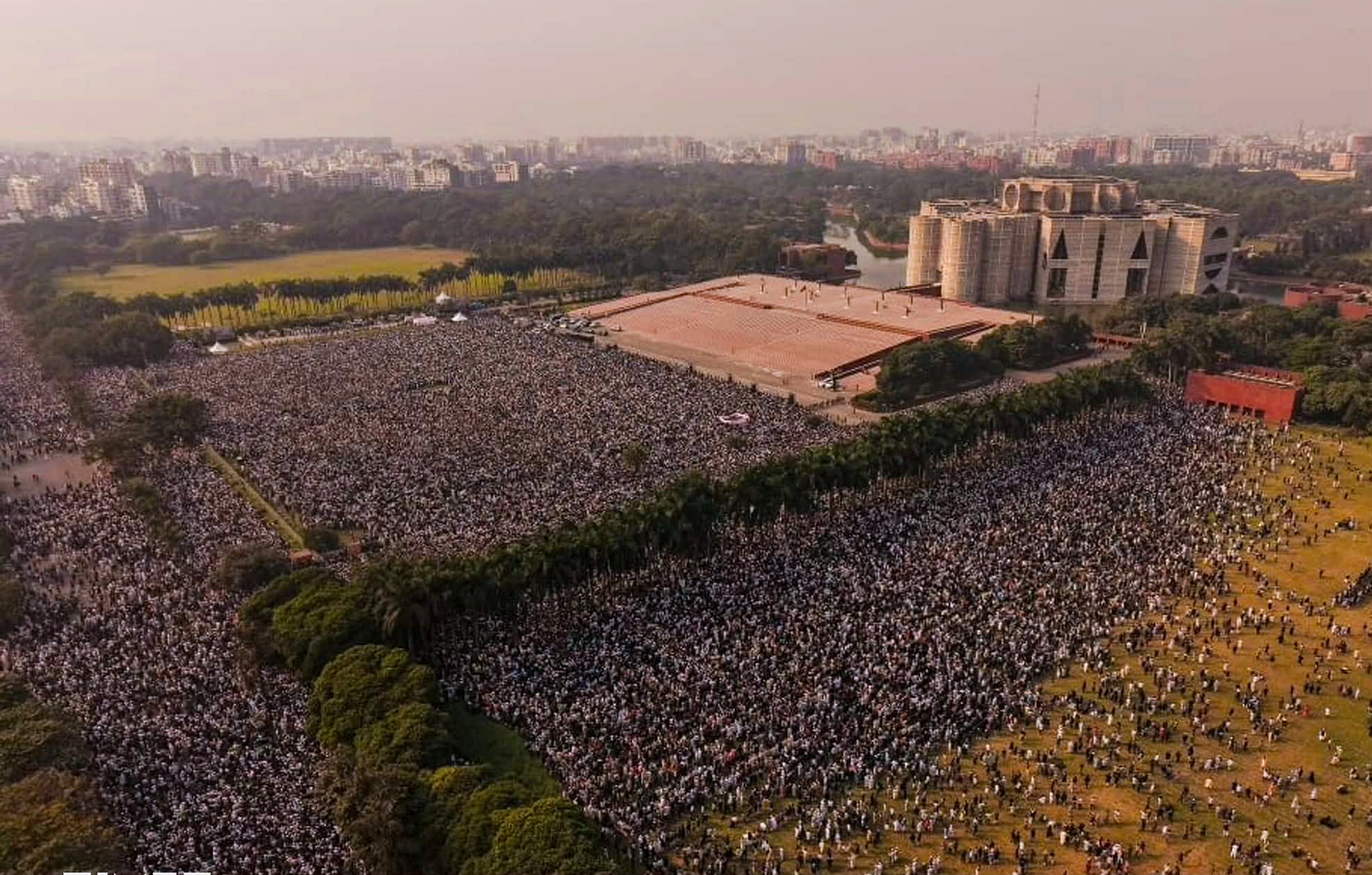 A Nation’s Farewell: Hundreds of Thousands Gather for Osman Hadi’s Funeral in Dhaka
 EU Agrees €90 Billion Loan for Ukraine After Talks Stall on Using Russian Assets
 Gaza Clown Who Lost Entire Family Brings Laughter to Children Amid War
 Osman Hadi will be Remembered as a Fearless Voice of the July Uprising and a Better Bangladesh
 Oscar Shortlists 2026 Revealed: Sinners and Wicked: For Good Lead Across 12 Categories